Comprehensive Foot Care Guide

Your feet carry the weight of your whole body, through daily walks, in movement around your home, as you exercise, and even when you stand still. Of all the muscles in your body, there are few that are as resilient or in need of as much care and attention. Despite this, general, routine foot care is something that many people overlook. It's easy to concentrate on washing your feet when you shower or trimming your toenails when they start to feel too long, without paying much attention to the health of the skin, nails, and joints themselves.
However, looking after your feet regularly can help you spot potential problems early. Good foot care doesn't need to be complicated, nor does it require an expensive collection of products. At
Tennant Podiatry, we see the impact of neglected feet on a daily basis, and we believe that it’s never too late to start showing your foundation the care it deserves. If you’re wondering where to start, our comprehensive foot care guide talks you through all the basics.
How to clean your feet
Each of your feet has around 250,000 sweat glands. This is why you will notice greater quantities of sweat on your feet, as well as a tendency to sweat more often than you might anywhere else. This is normal. However, it does create a breeding ground for fungal build up and odors.
Along with your hands and belly button, your feet are highly susceptible to picking up bacteria throughout the day, and bacteria feeds on waste that is pushed from your pores as you sweat. This is why your feet are more likely to contract fungal infections than other areas of skin—alongside a tendency to neglect daily foot hygiene.
But, with regular cleaning, this can be easily avoided. So how do you keep your feet clean? The best time to clean your feet is in the evening, to remove contaminants and bacteria that have accumulated during daily use. We recommend a foot bath:
- Fill a clean basin with warm water.
- Submerge your feet to the ankles.
- Soak your feet for 10-15 minutes.
- Gently scrub your feet using a soft bristled brush.
- Remove your feet and rinse with clean water.
- Pat (don’t rub) completely dry using a clean towel.
- Moisturise your soles and the tops of your feet with a small quantity of high quality cream or lotion.
How to clean your toenails
Cleaning your toenails should form a crucial part of your overall foot cleaning routine. You should:
- Soak your feet for 10-15 minutes to soften the nail.
- Gently scrub your nails with a soft bristled brush.
- Pat (don’t rub) completely dry using a clean towel.
- Ensure your feet are dry before putting socks or shoes on.
Avoid digging underneath your nails with sharp implements, as this can damage the skin and cause injury.
How to cut your toenails correctly
Trimming your nails frequently and correctly reduces the risk of fungal nail infections and ingrown toenails. It is also best practice to stop nails from rubbing in shoes.
You should aim to trim your toenails every 4-6 weeks, but everyone’s nails grow at different rates so you may find you need to trim your nails more frequently.
- Wash your feet using warm soapy water and dry them properly.
- Make sure your good quality toenail clipper is sharp and clean.
- Position yourself in good lighting.
- Hold your toe steady using your free hand and clip straight across.
- Avoid trimming right up to the nailbed or too close to the skin.
- Use a nail file to smooth any sharp or uneven edges.
If you cannot reach your feet comfortably or find nail trimming painful, professional help is a sensible option. Tennant Podiatry provides
toenail care and ingrown toenail treatment, including assessment when nails are causing pain or other problems.
Wear the right footwear
The shoes you wear every day influence how comfortable your feet feel and how much pressure is placed on your toes and soles. If your shoes are too tight or the wrong shape, you can subject your feet to injuries, corns, calluses, blisters, pressure sores, and misalignment, as well as the potential for various painful conditions like achilles tendonitis, metatarsalgia, plantar fasciitis, heel pad syndrome, heel spurs, and nerve entrapment.
Look for shoes with:
- A wide, comfortable shoe box: Your toes should be able to rest naturally without being compressed together, with plenty of room across the forefoot.
- A secure fit around the heel: Your heel should feel supported in your shoe.
- Suitable cushioning and support: A comfortable sole can help manage impact during everyday activities. The amount and type of support you need will depend on your foot structure and any symptoms you experience. If you have flat feet, you may benefit from custom orthotics.
- Breathable materials: Shoes that allow moisture to escape will help prevent your feet from remaining damp throughout the day.
- A design suitable for the activity: Shoes designed for running, walking, work, or sport will offer different features. Choose footwear appropriate for what you'll be doing.
- No rubbing or pinching: A shoe shouldn't cause pain or leave repeated pressure marks.
How can you tell if your shoes are causing foot problems?
You may notice redness, blisters, corns or soreness in places where your shoes repeatedly rub. Pain around the toes or across the ball of the foot can also be associated with footwear that is too narrow or places excess pressure on the forefoot.
If discomfort keeps returning despite changing your shoes, you should have your feet assessed by an experienced podiatrist. Foot pain can have several causes, and footwear isn't always the only factor.
Tennant Podiatry provides
foot and ankle assessments and custom 3D printed orthotics for suitable patients where additional support may be needed.
What foot care items should you keep at home?
Your home foot care routine can be benefited by keeping basic items in your cupboard. A small collection of suitable tools is often enough for everyday care. These can include:
- A clean toenail clipper
- Clean fingernail clippers
- A nail file
- A soft nail brush
- A clean, soft towel
- A foot moisturiser/lotion for dry skin
- A hand mirror to help you inspect the soles of your feet
- Plasters or sterile dressings for protecting minor skin injuries
- Blister plasters
Should you walk barefoot in public facilities?
Public facilities can expose your feet to fungal infections and viruses that cause verrucas, particularly where floors remain damp and people walk barefoot.
To help protect your feet in these environments, you should:
- Wear flip flops or pool shoes in communal showers and changing rooms
- Avoid sharing towels, socks and shoes
- Dry your feet thoroughly after swimming or showering
- Change out of damp socks as soon as practical
- Cover cuts or damaged skin appropriately
- Avoid picking at verrucas or touching infected areas unnecessarily
How often should you massage your feet?
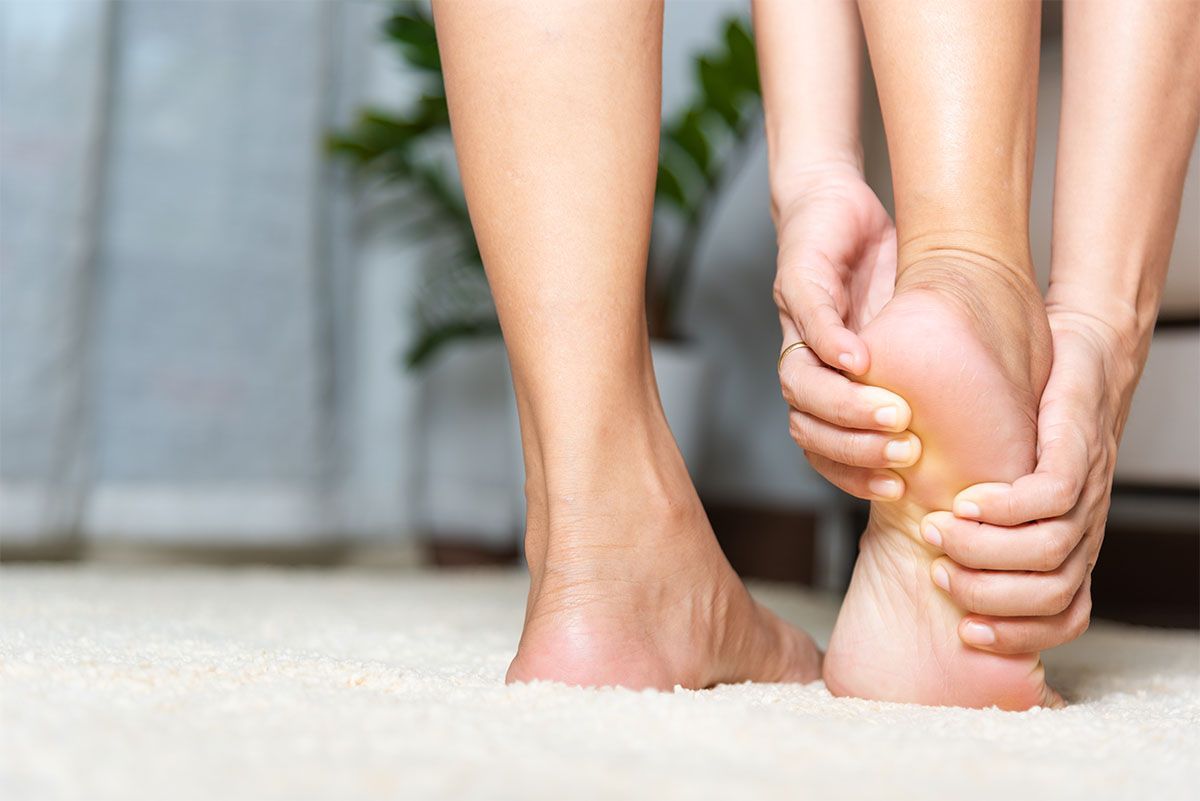
Foot massages might seem a vanity project but they help improve circulation and loosen tension in muscles that are often neglected. Feet hold the weight of your body and, although they are designed to do so, extensive use can still put unnecessary strain on your heel pads, ankles, arches, and the balls of your feet.
If your feet are healthy and you find massage comfortable, you could spend a few minutes gently massaging the soles, toes and arches when they feel tired or tight. Building massage into your nightly foot cleaning routine as standard can reduce tiredness and relieve tension.
Movement and pressure should be gentle. If you experience any pain when massaging your feet, you should seek the advice of a podiatrist. Tension is normal in your foot muscles, but any pain is unusual.
Disclaimer: If you have experienced a recent injury to the foot, avoid applying pressure to the impacted area as this can make it worse.
Foot health red flags
Checking your feet regularly can help you recognise changes early, but it is equally important to know when a problem needs professional attention.
Seek urgent medical advice if you experience:
- Severe foot pain or an inability to stand or walk after an injury
- Significant or worsening swelling or bruising
- A foot or ankle that has changed shape following an injury
- A foot that suddenly becomes unusually cold, pale, blue or grey, particularly with numbness
- A hot, swollen foot accompanied by fever, shivering or feeling very unwell
- A wound that appears infected, with increasing redness, heat, swelling or discharge
Pay particular attention if you have diabetes
Diabetes can affect sensation and blood supply in the feet. This means a cut, blister or pressure injury may develop without causing much pain, and wounds may be slower to heal.
If you have diabetes, check your feet every day and seek prompt advice if you notice a new blister, break in the skin, redness, swelling, unusual warmth, colour change or discharge. Do not wait for the problem to become painful.
You should also have a diabetic foot assessment every 6-12 months. Your GP practice may provide this for you free of charge. It should include Doppler ultrasound to listen to your pulses and check blood flow, a test to see that the nerves are functioning correctly in your feet and have not been damaged by your diabetes. The assessment also should include a foot postures assessment to make sure there are no high pressure areas a footwear assessment and a brief dermatology assessment. We have a diabetic/vascular specialist at Tennant Podiatry if you need this service privately.
Common foot hygiene concerns and how to manage them
Even with an exceptional foot hygiene routine, you may still be susceptible to common podiatric issues. Here are some of the most common healthcare concerns with the feet and what you should do if you are experiencing these issues:
Blisters
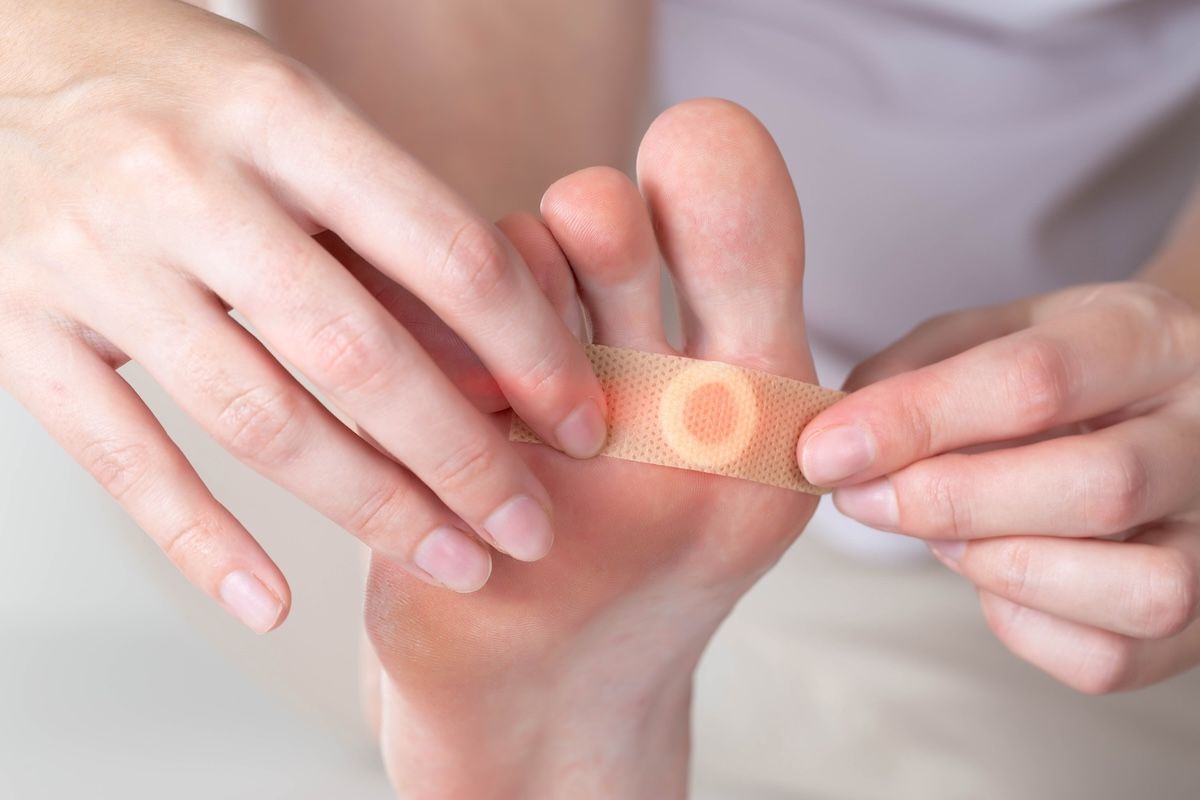
Blisters are most commonly caused by wearing footwear that rubs the skin at any point on your foot. This friction causes fluid to collect below the outer layer of skin and can be painful and disruptive. They are most commonly found on the big and little toes, heels, and ankles.
Although common, untreated blisters can burst and become infected.
To protect it:
- Keep the area clean
- Cover it with a suitable blister plaster or padded dressing
- Avoid the footwear or activity that caused the rubbing until the skin has recovered
- Don't deliberately burst the blister or peel away the skin
- If a blister bursts, wash the area gently with soap, pat it dry with a clean towel, and cover it with an appropriate dressing
Blisters can be few and far between, but if you suffer with recurring blisters, the cause will need addressing. Commonly, this is down to your choice of footwear or excessive pressure caused by poor foot posture (incorrect fitting shoes, worn shoes, inflexible material). A z,
Seek medical advice if a blister becomes increasingly painful, the surrounding skin is hot or red, or there is pus or other evidence of infection. If you have diabetes, poor circulation, or another condition that causes reduced sensation, seek advice immediately about blisters or broken skin.
Athlete’s foot
Tinea Pedis, more widely known as athlete’s foot, is the most common fungal skin infection contracted on the feet. It causes flaky, damp looking, itchy patches of skin between the toes and across the pads of the feet.
It thrives in moist, warm environments making swimming pools and changing rooms common points of contraction. You can reduce the risk by washing and drying your feet thoroughly, changing damp socks, allowing shoes to dry between wears, and avoiding shared towels.
If you develop symptoms, a podiatrist can advise and prescribe antifungal creams, sprays or powders. Athlete's foot does not always clear without treatment, and it may require several weeks of treatment. If symptoms are severe, spread, keep returning or do not improve, seek professional advice.
Ingrown toenails
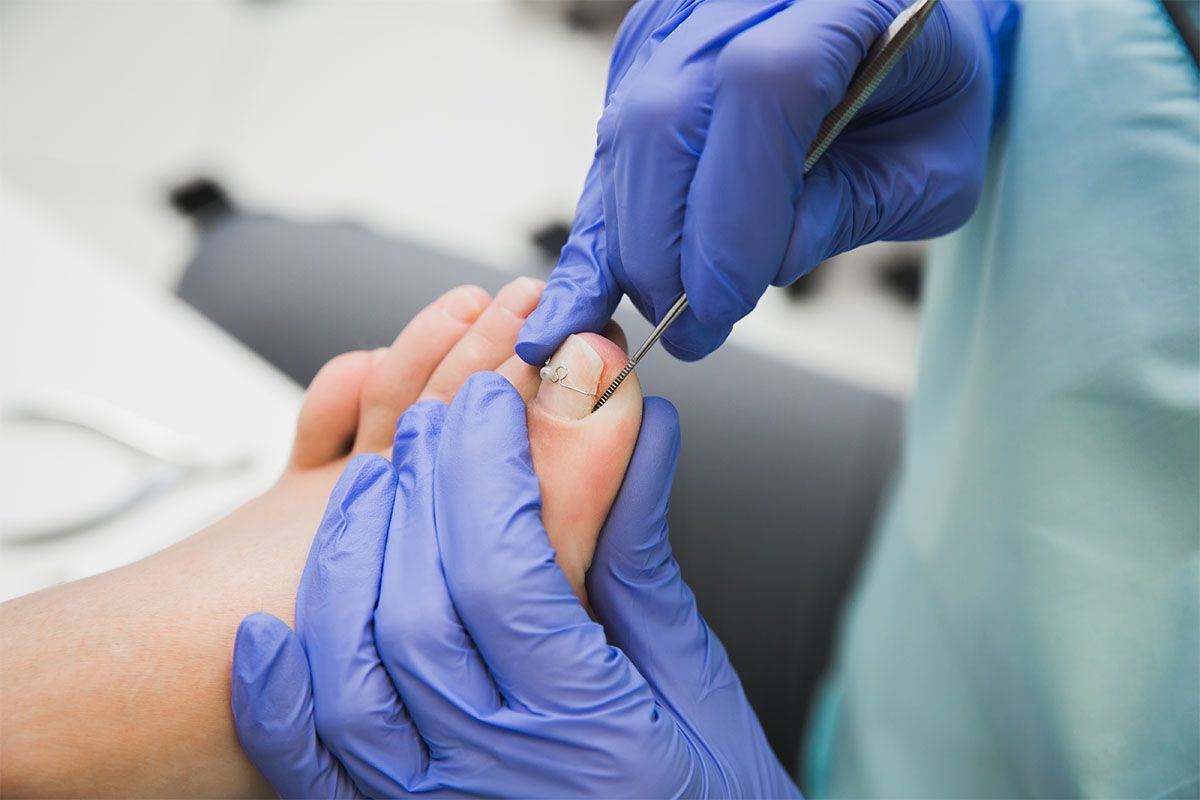
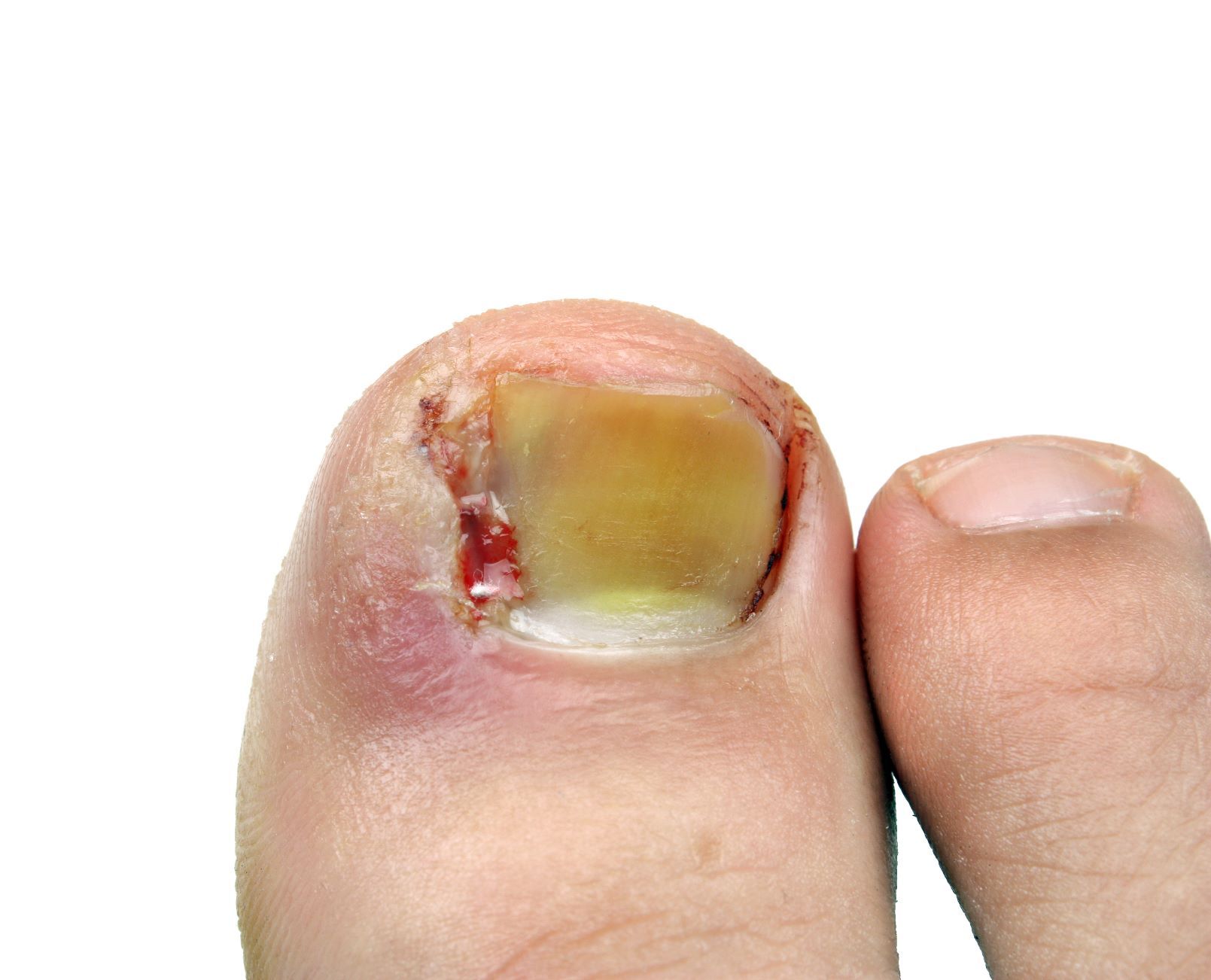
An ingrown toenail occurs when the edge of a nail grows into the surrounding skin of the toe, causing pain and often recurring infections. The nail can grow sideways or curl downwards depending on the anatomy of the toe and the cause of overgrowth.
If you are showing signs of an ingrown toenail then your Chiropodist or Podiatrist will assess its condition and give you the best advice. This could be a course of antibiotics or removal of the ingrown portion of the nail. If you have a reoccurring issue Tennant Podiatry have expert clinicians specialising in this area who focus on a long term cure rather than maintenance including nail bracing and if necessary, minor surgery.
They may recommend the following for management of mild symptoms:
- Soak your toe in warm, salty water and then rinse and dry immediately
- Keep your toe dry
- Wear wide fitting shoes
- Avoid activity where rubbing the toe is possible (hiking, football, dancing)
- Take paracetamol/ibuprofen
Tennant Podiatry provides
ingrown toenail assessment and treatment, with options depending on the severity of the problem.
Verrrucae
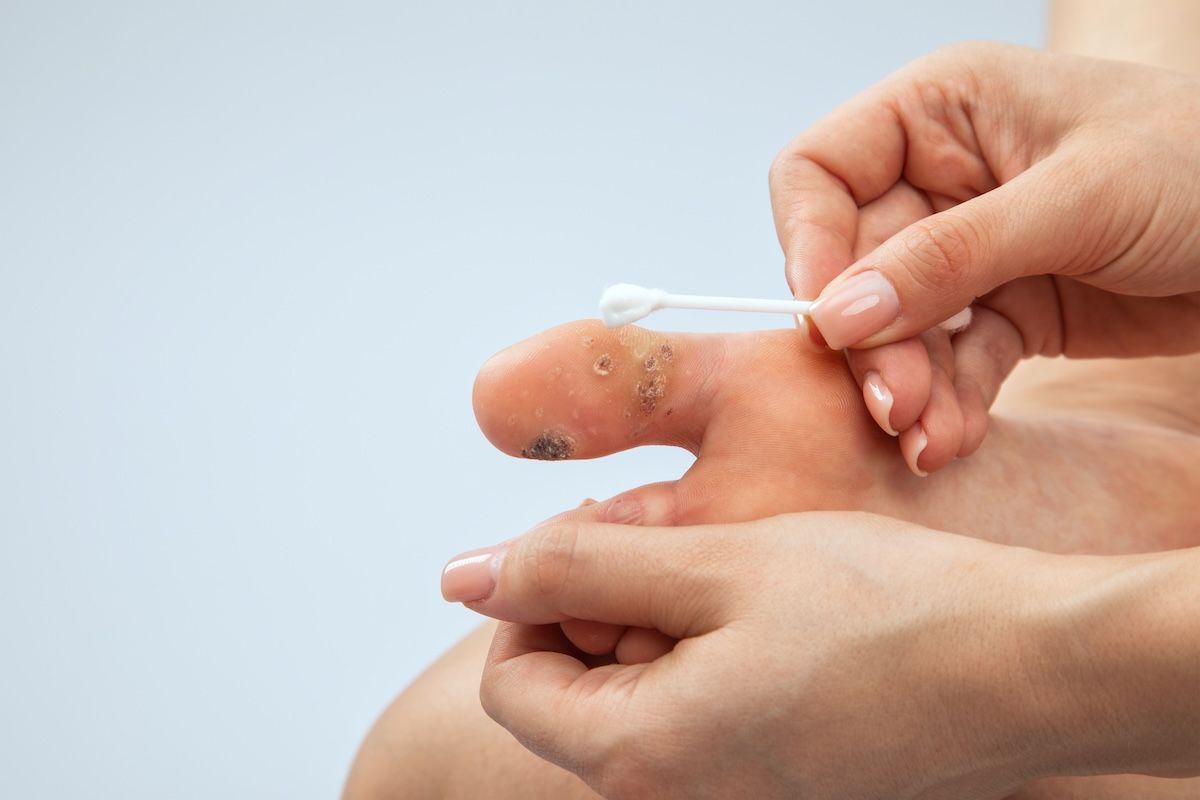
A verruca is a viral skin lesion caused by human papillomavirus (HPV). It commonly develops on the sole of the foot and may look like a small, rough or thickened patch of skin. Some verrucas contain tiny black dots and can become uncomfortable when standing or walking. Some verrucas clear without treatment, while others persist, become painful or spread.
If you have a verruca, avoid picking, scratching or cutting a verruca, as this can damage the skin and encourage spread. Do not share towels, socks or shoes, and wear flip flops in communal changing rooms and showers.
Verrucas can be treated using home topical treatments that can be bought from a pharmacy but if the verruca is painful, persistent, spreading or affecting your everyday activities, a podiatrist can assess it and discuss suitable treatments.
Tennant Podiatry offers
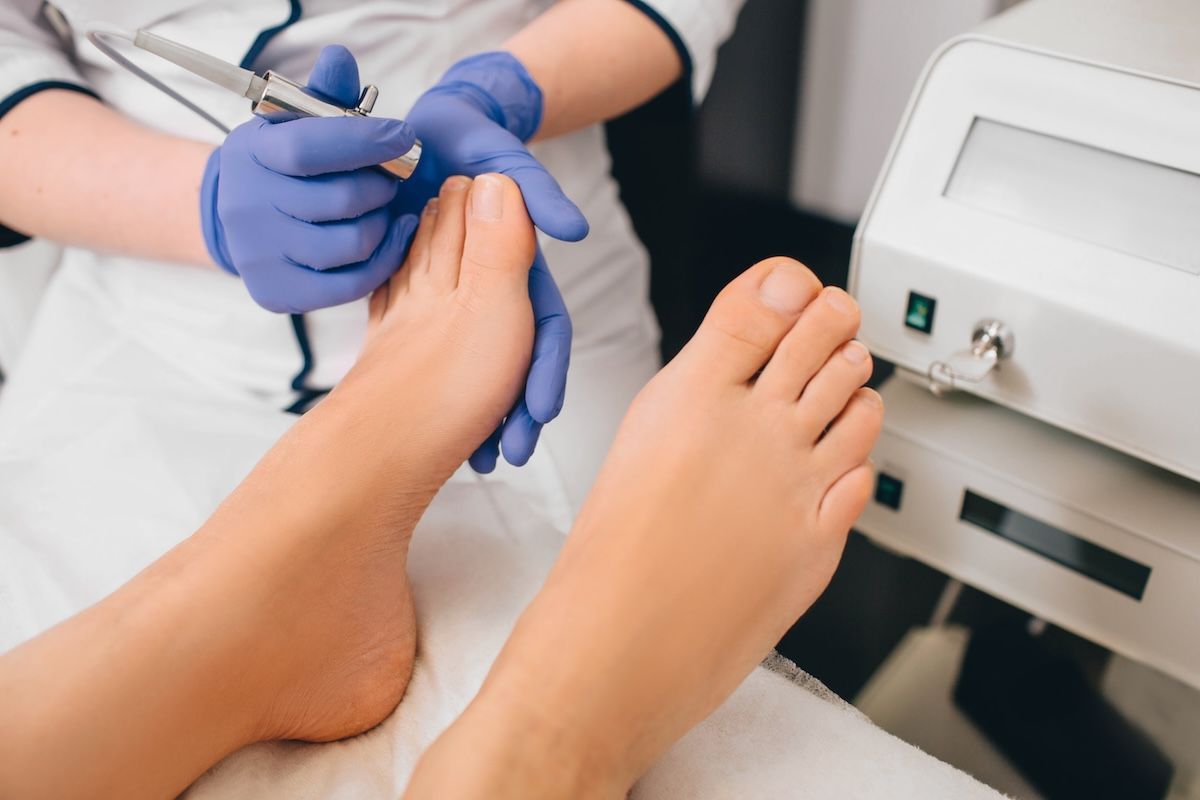
Swift Microwave Therapy for verrucas, cryotherapy, and also advanced verrucae needling techniques, alongside other options where appropriate. An assessment helps determine whether a lesion is a verruca and which treatment may suit you.
For more information, take a look at our
complete guide to verruca treatment.
Fungal nail
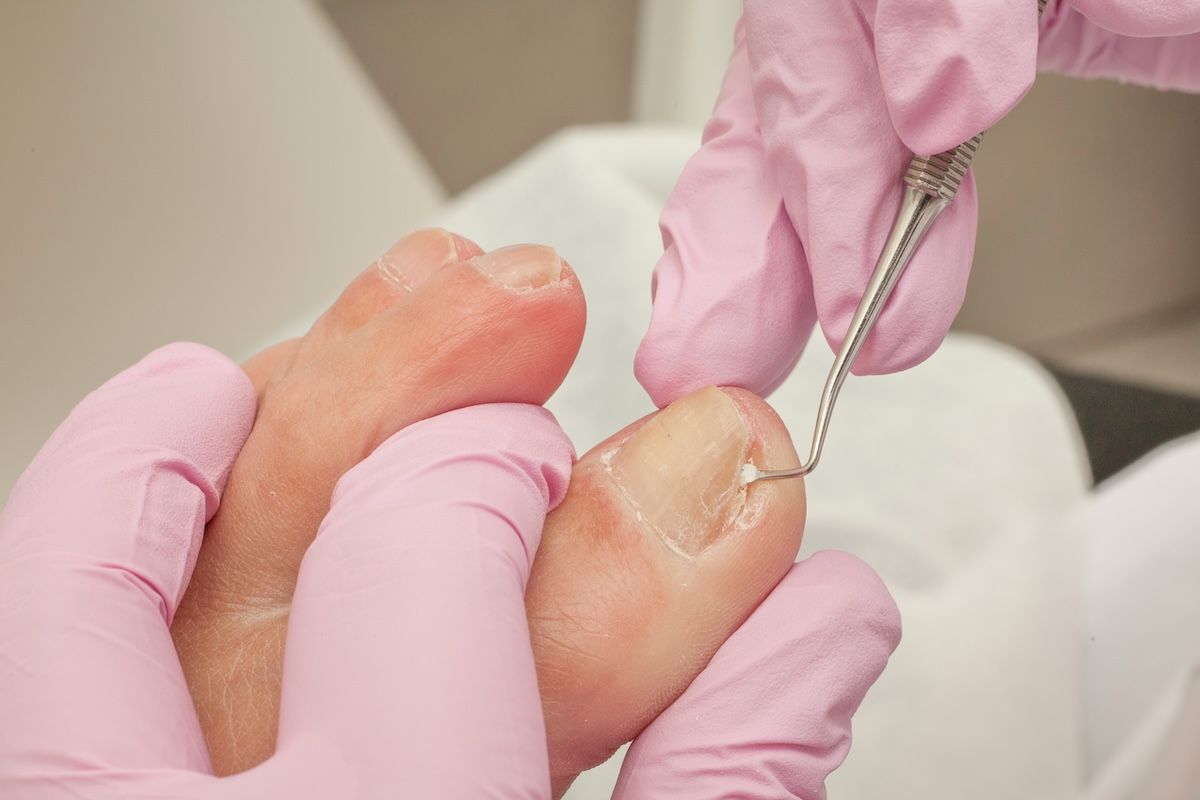
Fungal nail infections can cause nails to become discoloured, thickened, brittle or crumbly. However, similar changes can occur following injury or because of other nail conditions, so appearance alone cannot always confirm a fungal infection.
If you suspect a fungal nail infection, an assessment with a podiatrist can help establish whether fungus is the likely cause and what treatment options are suitable. Treatment times vary, and a damaged nail can take many months to grow out even after the infection has been brought under control.
Tennant Podiatry offers
fungal nail assessments and treatment options, including Clearanail, Lunula Laser and urea debridement treatments. Your podiatrist can explain the options and what to expect before proceeding. Clearanail have designated us a ‘centre of excellence’ for treatment of fungal nail.
When should you see a podiatrist for a foot problem?
Not every foot concern requires urgent medical attention, but professional podiatry advice can be valuable when a problem persists or interferes with daily life.
Consider booking an assessment if you have:
- Recurrent heel or ball of foot pain
- An ingrowing toenail, particularly where symptoms are recurrent
- Thickened or discoloured toenails
- Persistent athlete's foot
- Suspected fungal nail infection
- A painful or persistent verruca
- Corns, calluses or hard skin that repeatedly return
- A bunion that makes footwear uncomfortable
- Difficulty cutting your toenails safely
- Foot pain that affects walking, exercise or work
- Changes in the shape, colour or condition of your feet that concern you
If you have noticed changes in your feet, are experiencing discomfort, have a long term health condition that impacts your joints, or would simply like reassurance about your foot health, a professional assessment can provide clarity and support. Seeking advice sooner often means simpler treatment, and a quicker return to doing the things you enjoy.
At
Tennant Podiatry, our podiatrists, accredited by the Royal College of Podiatry, treat all foot troubles and lower limb conditions with access to state of the art facilities and a comprehensive understanding of how feet are interconnected with the rest of the body. Our aim is always to make your life more comfortable through bespoke, informed treatment.
Contact us today.