Corn Removal
Our clinicians are experts and provide complete removal of corns, which are areas of thickened skin caused by friction or excessive pressure. Using specialist instruments and equipment, we carefully and safely remove the corn and surrounding dead skin.
Corns are prone to recurrence, meaning they can return over time once removed if the underlying cause is not addressed.
Preventing the Cause
Recurrence is preventable. During your consultation, we assess the cause of the pressure and provide tailored advice to reduce it. This may include guidance on suitable footwear and pressure-relieving strategies.
In many cases, we can offload the pressure area using:
- Custom-made 3D printed insoles for corns on the sole of your feet (CAD-CAM designed and printed in-house), or
- Specialist hand-moulded silicone toe splints to place between toes affected by corns.
- Curacorn-
An injection of naturally occurring gel under the corn to cushion the skin and prevent it coming back
These insoles, also known as orthotics, are designed from a three-dimensional scan of your feet performed in clinic. They conform precisely to your unique foot shape and redistribute pressure while standing and walking. By relying on our expertise, we can relieve discomfort in a single appointment and provide a long-term solution to your painful symptoms.
Enquire Now
Fill out the form below and we'll get back to you as soon as possible!
Contact Us
Curacorn - Preventing the Corn from Returning
When footwear cannot accommodate an insole, or when corns are caused by toe deformities or thinning of the protective fat pad (known as plantar fat pad atrophy), we also offer a revolutionary treatment called Curacorn.
Using a cutting-edge technique, we introduce a synthetic gel fat pad beneath the skin. This permanently restores cushioning to the area, preventing the corn from returning and providing lasting relief.
Curacorn®
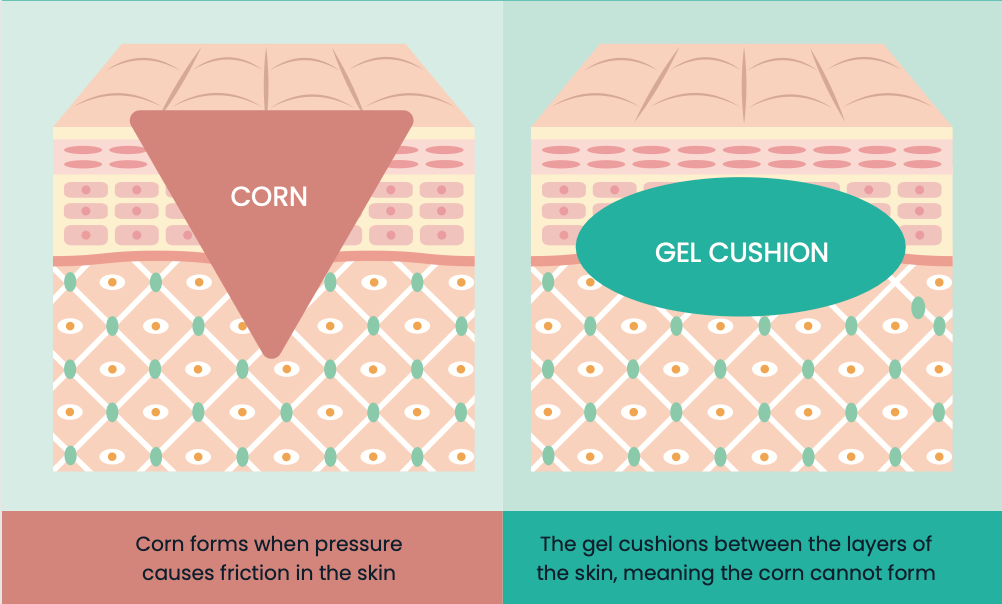
Curacorn® is a revolutionary technique using a sterile gel injection to cushion painful corns or pressure areas in the foot from inside the skin. The procedure can eliminate the need for bulky padding or frequent visits to your podiatrist to have corn or calluses cut away.
Curacorn®
All corns or calluses form as a result of pressure from within the skin where the boney structures below rub the inner layers of the dermis. By injecting a sterile
cushion between these layers, Curacorn can eliminate the skin’s reaction to the pressure & callus does not form.
Curacorn®
High-pressure areas lead to the formation of hard skin, which is not only unsightly but can also become painful if left to accumulate. Hard skin can create a breeding ground for bacteria, causing foot odour and cracked heels.
Our single, painless treatment effectively eliminates this hard skin, leaving your skin feeling soft. Additionally, we apply specialised emollient creams that typically prevent its return with ongoing at home application.
FAQ
Tennant Podiatry have compiled answers to some of the most common questions we hear from our patients.
What are corns and calluses?
Corns and calluses are characterised as hardened lumps of skin that form as a result of prolonged friction or pressure. They are thick and rough, and can appear flaky, dry or waxy. They may also be tender and raised from the surface of your skin.
They can form over time and can be painful but are not directly harmful to your health unless they are cracked, bleeding, impacting a nerve, or causing ongoing discomfort.
Do you treat warts on hands?
Yes we have lots of experience treating warts on hands, under and around finger nails as well as feet and toes. Our verrucae treatments start from as little as £60 per visit but we highly recommend attending for a FREE of charge verrucae consultation. Swift microwave therapy costs £150 per treatment but statistically clears 85% of verrucaes and warts within 1 and 3 treatments.
Why has my corn come back?
Corns and hard skin are caused by pressure so once the corn is removed it will come back unless the cause of the pressure or friction is removed. That's where 3D orthoics and bespoke moulded silicone splints can come in to trey and relieve the pressure.
Where do you get corns and calluses?
Corns and calluses appear anywhere that is exposed to frequent friction, but most commonly appear on:
Hands
Feet
Toes
Fingers
What is the difference between a callus and a corn?
Calluses develop on pressure spots and are typically larger than corns. They may look like dry skin. Corns are smaller than calluses and more likely to become painful as they sit deeper into the skin. They appear as a lump of hardened skin surrounded by a swollen area and are more distinctive and easy to identify.
How to prevent corns and calluses
Corns and calluses are often, but not always, preventable when the following steps are taken:
- Wear the correct sized shoes: Calluses and corns can be caused by wearing shoes that are too small. When they rub against the outside or tops of your toes, corns form to protect your skin from the friction.
- Wear coverings: Wear corn pads over areas that are prone to corns to prevent them from forming.
- Wear padded or protective gloves: Corns on the hands can be prevented by wearing specialised gloves appropriate for the activity. When gardening, wear gardening gloves. When exercising, wear compression gloves.
How to get rid of corns and calluses
Apply the above preventative measures to reduce the friction on affected areas. If unsuccessful, visit an experienced podiatrist to have the skin carefully removed and receive tailored advice on how to prevent them from recurring.
What causes cracked heels?
Cracked heels are caused by a number of factors, primarily worsened by prolonged periods of excess pressure applied to the heels. Factors that can influence cracked heels include dry skin, nutrient deficiency, weight gain, ageing skin, dehydration and inadequate foot care.
There is not one single contributor to cracked heels, and an experienced podiatrist will be able to assess the condition of your feet and recommend the most appropriate treatment for your unique circumstances.
How to help cracked heels
If you are suffering from cracked heels, the best course of action is to visit a podiatrist for treatment. Although at home treatments can be applied to temporarily soothe the discomfort, leaving cracked heels can lead to bacteria build up and a worsening in the pain.