Can You Cure an Ingrown Toenail from Home?

Ingrown toenails can be surprisingly painful. What often starts as a slight discomfort at the edge of the nail can quickly develop into a more serious condition that can be both urgent and distressing, particularly if the pain begins to interfere with daily life. It’s completely natural to feel concerned or unsure about what to do next. Many people attempt to manage an ingrown toenail at home, often due to worries about time, cost, or feeling self conscious about seeking treatment. However, ingrown toenails are a common condition that podiatrists treat regularly, and you will never be faced with judgement.
While mild symptoms can sometimes be managed at home, the most reliable way to treat an ingrown toenail, and prevent it from worsening or returning, is through proper assessment and care from a qualified podiatrist. At
Tennant Podiatry, we want our patients to feel prepared when an
ingrown toenail begins to interfere with daily life so we have outlined the extent to which this condition can be self managed and when exactly you should seek professional treatment.
What is an ingrown toenail?
An ingrown toenail occurs when the edge of a nail grows into the surrounding skin of the toe, causing pain and often recurring infections. The nail can grow sideways or curl downwards depending on the anatomy of the toe and the cause of overgrowth.
In some cases, ingrown toenails can be mild and require minimal treatment. In other cases, the nail can penetrate more deeply into the tissue of the toe and require surgical treatment.
They can occur on any toe but are more common on the big toe where the nail is thicker and more prone to rubbing in shoes.
How do you know if you have an ingrown toenail?
Sometimes, an ingrown toenail can be mistaken for a bacterial infection or fungal nail and vice versa. However, the symptoms vary. If you have the following symptoms, then you should contact a HCPC registered Chiropodist podiatrist with a suspected ingrown toenail:
- Pain in the toe, typically prominent on one side of the nail
- Tenderness surrounding the impacted area
- Redness and swelling
- Skin that feels warm either directly on the centre of pain or around it
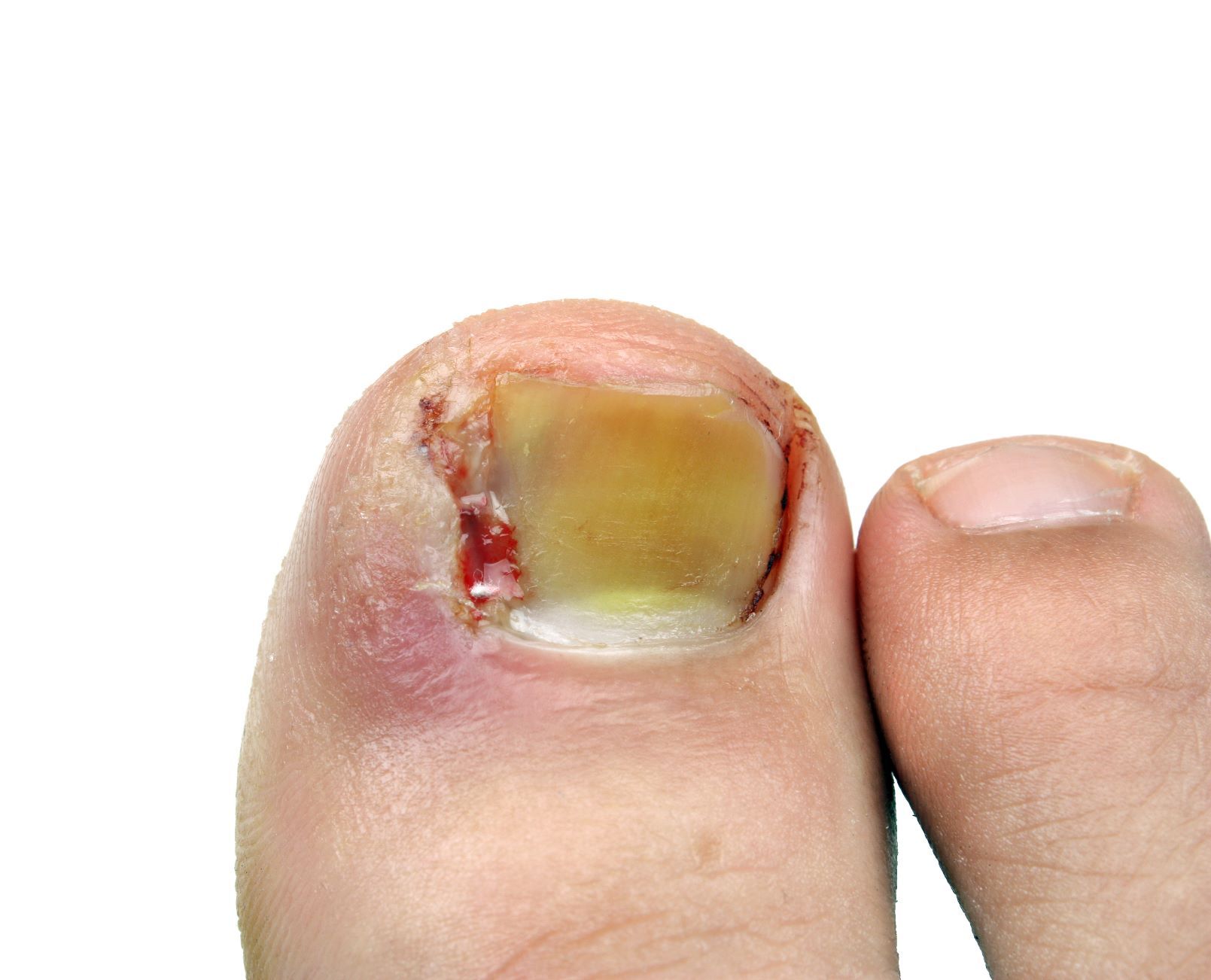
- Signs of infection including pus and a crusty appearance
Signs your ingrown toenail is infected
If you have an infected ingrown toenail, then you shouldn’t wait to contact a healthcare provider especially if you have a condition like diabetes or low blood pressure. Infections can spread and extremities are particularly vulnerable to further complications, making the toenail harder to treat and putting you at risk of sepsis if left untreated.
If you have any of the following symptoms, don’t hesitate to seek medical advice:
- Pus coming out of the wound. This will be white or yellow and crusty when dry
- Pain is throbbing
- You feel hot
- The pain and/or swelling get rapidly worse
Can you treat an ingrown toenail from home?
The symptoms of mild ingrown toenails can be self managed but generally ingrown toenails shouldn’t be treated from home. If you are showing signs of an ingrown toenail then your Chiropodist or Podiatrist will assess its condition and give you the best advice. This could be a course of antibiotics or removal of the ingrown portion of the nail.
They may recommend the following for management of mild symptoms:
- Soak your toe in warm, salty water and then rinse and dry immediately
- Keep your toe dry
- Wear wide fitting shoes
- Avoid activity where rubbing the toe is possible (hiking, football, dancing)
- Take paracetamol/ibuprofen
When should you see a podiatrist?
While mild symptoms can sometimes be managed at home, ingrown toenails often worsen without the right treatment. Early treatment is typically simpler, quicker, and far more comfortable than waiting for the condition to progress.
You should seek professional advice if:
- The pain is persistent or worsening
- There are signs of infection (pus, swelling, heat)
- The problem keeps returning
- You are unable to manage the nail safely yourself
- You have diabetes, poor circulation, or reduced sensation in your feet
How an ingrown toenail is treated by a podiatrist
The method of treatment for an ingrown toenail will depend on how advanced the condition is at the time you seek treatment. If caught early, treatment is swift and simple. Podiatrists are trained to remove the ingrowing toenail as painlessly as possible. They are experienced at using local anaesthesia when needed.
An experienced podiatrist will want to assess the condition of your toe before prescribing treatment and will discuss your options with you:
Mild ingrown toenail treatment:
If early intervention is sought, then the nail can be painlessly trimmed back to encourage healthy regrowth. This will need to be performed by a trained podiatrist who understands exactly how to trim the toenail to prevent the risk of recurrence.
More advanced ingrown toenail treatment:
If it progresses beyond the mild stages (the most common time people seek treatment), the nail spike can be removed from the tissue of the toe under local anaesthetic. It will then be dressed with an antiseptic dressing and in some cases antibiotics may be prescribed if infection was present at the time of removal.
Severe ingrown toenail treatment (partial nail surgery):
In some more advanced cases, or where the ingrown nail is reoccurring, the spike may be too deep to remove without surgical intervention. In this instance, a more potent topical anaesthetic will be used, so you will feel little to no pain at all during the procedure.
One or both sides of the nail will be lifted from the nail plate and removed, the area will undergo chemical cauterisation to prevent the nail spike (part of the nail that has ingrown) from growing back. This is because the risk of recurrence is too high at this stage. Although this may sound frightening, it will provide permanent relief from the symptoms of ingrown toenails and experienced, accredited podiatrists will perform this surgery excellently. The nail plate will be slightly narrower after treatment, but Podiatrists are trained to get the best cosmetic result.
Full surgical removal:
In more severe or recurring cases, where the entire nail is affected, full nail removal may be recommended. This is typically considered when the ingrown nail is very severe, repeatedly becomes ingrown despite previous treatment, there is significant thickening or deformity of the nail, or when infection is persistent or difficult to manage.
The procedure is carried out under local anaesthetic, meaning the toe is completely numb and the treatment is comfortable. The entire nail is gently removed, and a chemical called phenol is applied to prevent regrowth of the nail.
How to prevent an ingrown toenail from returning
Once you have experienced an ingrown toenail, taking preventative steps can help reduce the risk of it returning:
- Trim your nails correctly: Cut your toenails straight across rather than rounding the edges. This helps prevent the nail from growing into the skin as it regrows.
- Avoid cutting nails too short: Leaving a small amount of nail length reduces the chance of the surrounding skin folding over the nail edge.
- Wear well fitting footwear: Shoes that are too tight or narrow can place pressure on the toes, increasing the likelihood of the nail growing into the skin. Opt for footwear with enough room in the toe box.
- Keep feet clean and dry: Maintaining good foot hygiene helps prevent infection and keeps the skin around the nail healthy.
- Avoid repeated trauma: Activities that place repeated pressure on the toes, such as running, football, or dancing, can contribute to ingrown nails, particularly if footwear is not supportive.
- Seek early advice: If you notice discomfort, redness, or the early signs of an ingrown toenail, seeking professional care early can prevent it from becoming more severe.
The importance of professional treatment
Although it may be tempting to try and manage an ingrown toenail yourself, improper cutting or attempting to remove the nail at home can make the problem worse. This can increase the risk of infection, deeper nail penetration, and recurrence. Seeking professional care ensures the problem is treated correctly the first time.
A podiatrist has the training and clinical experience to:
- Safely remove the ingrown portion of the nail either temporarily or permanently
- Relieve pain quickly and effectively
- Treat and manage infection where present
- Provide long term solutions to prevent recurrence
What happens if you leave an ingrown toenail untreated?
Leaving an ingrown toenail untreated can allow the condition to gradually worsen over time.
What may begin as mild discomfort can develop into:
- Increased pain and swelling, making it difficult to walk or wear shoes comfortably
- Infection, where bacteria enter the broken skin surrounding the nail
- Persistent or recurring symptoms, especially if the nail continues to grow incorrectly
- Overgrowth of skin around the nail, sometimes referred to as ‘proud flesh’
- Spread of infection, particularly in more vulnerable individuals
For those with underlying health conditions such as diabetes or poor circulation, the risks can be more serious. Even a small infection can become more difficult to manage and may lead to further complications if not treated promptly.
Early intervention is always the simplest and most effective approach.
Next steps
Ingrown toenails can feel excruciating and at times worrying but they are a very common and highly treatable condition. You do not need to wait for the pain to become severe or for signs of infection to appear before seeking help. In fact, early treatment is often the quickest and most comfortable way to resolve the problem and prevent it from returning.
At
Tennant Podiatry, we are highly experienced with
ingrown toenail surgery performing numerous procedures every year with excellent cosmetic results and permanent relief from the symptoms of an ingrowing nail. If you are concerned about symptoms of a new or recurring ingrown toenail, we provide compassionate, professional support to relieve your pain and prevent recurrence. Book your appointment today.