Ingrown nail
Ingrown nail
Good hygiene can go a long wayto preventing ingrowing toenails. Avoid moist, soggy feet by rotating yourfootwear so each pair has a chance to dry out thoroughly. Avoid syntheticmaterials and choose socks and shoes of natural fibre which fit properly. Keepyour feet clean and dry and in the summer wear open-toed sandals to let air getto your toes as much as possible.
If you have diabetes, are takingsteroids or are on anti-coagulants, do not attempt to cut your nails or removean ingrowing spike of nail yourself.
When should I see apodiatrist?
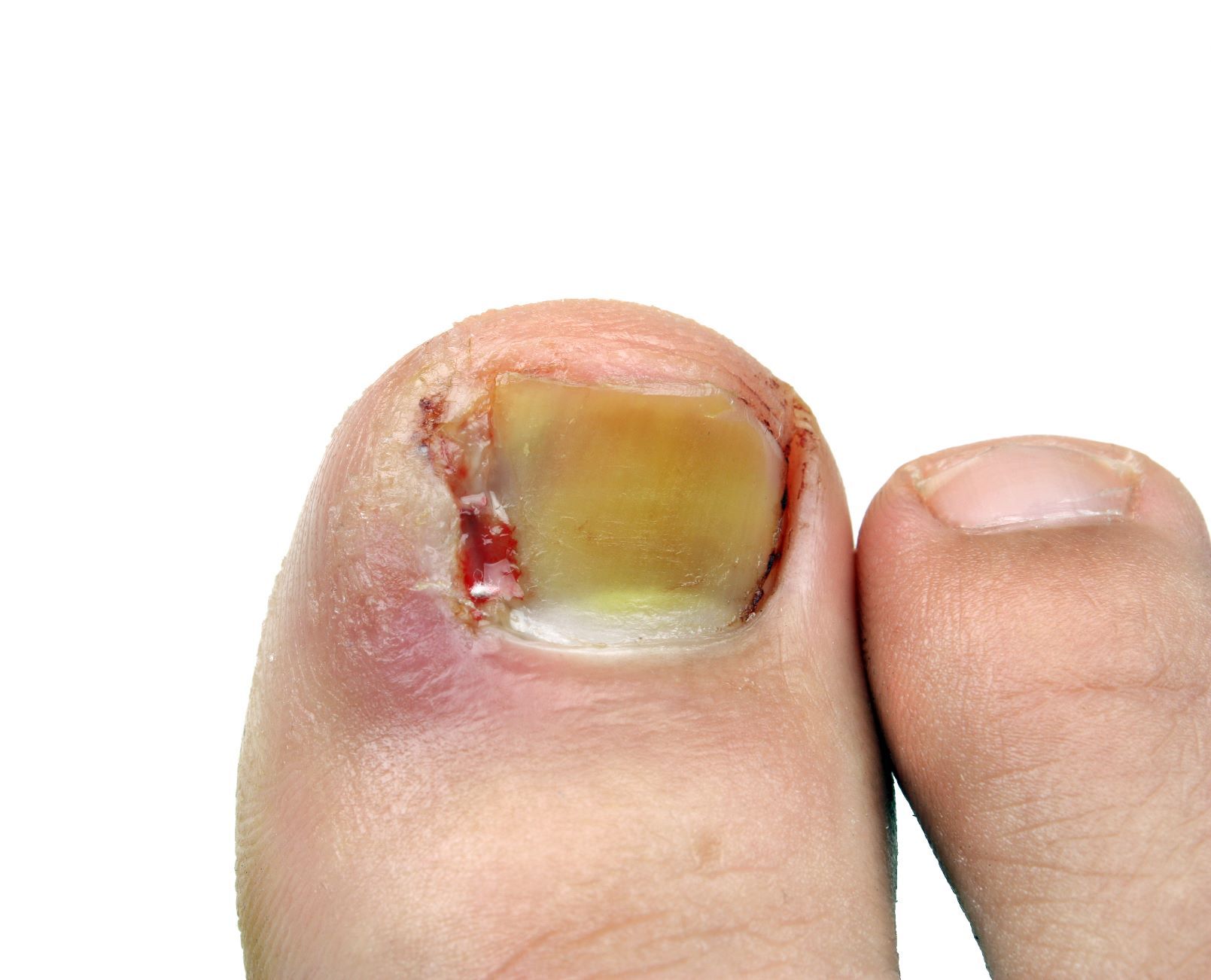
You should see a podiatristurgently if you have symptoms of infection, and have diabetes, poor circulation,or a reduced immune system. You should also visit a podiatrist if youexperience any persistent pain in your toe from the ingrowing nail or have acondition that affects the nerves and/or feeling in your foot.
If you experience any foot careissues that do not resolve themselves naturally or through routine foot carewithin three weeks, you should seek the help of a healthcare professional.
Options available
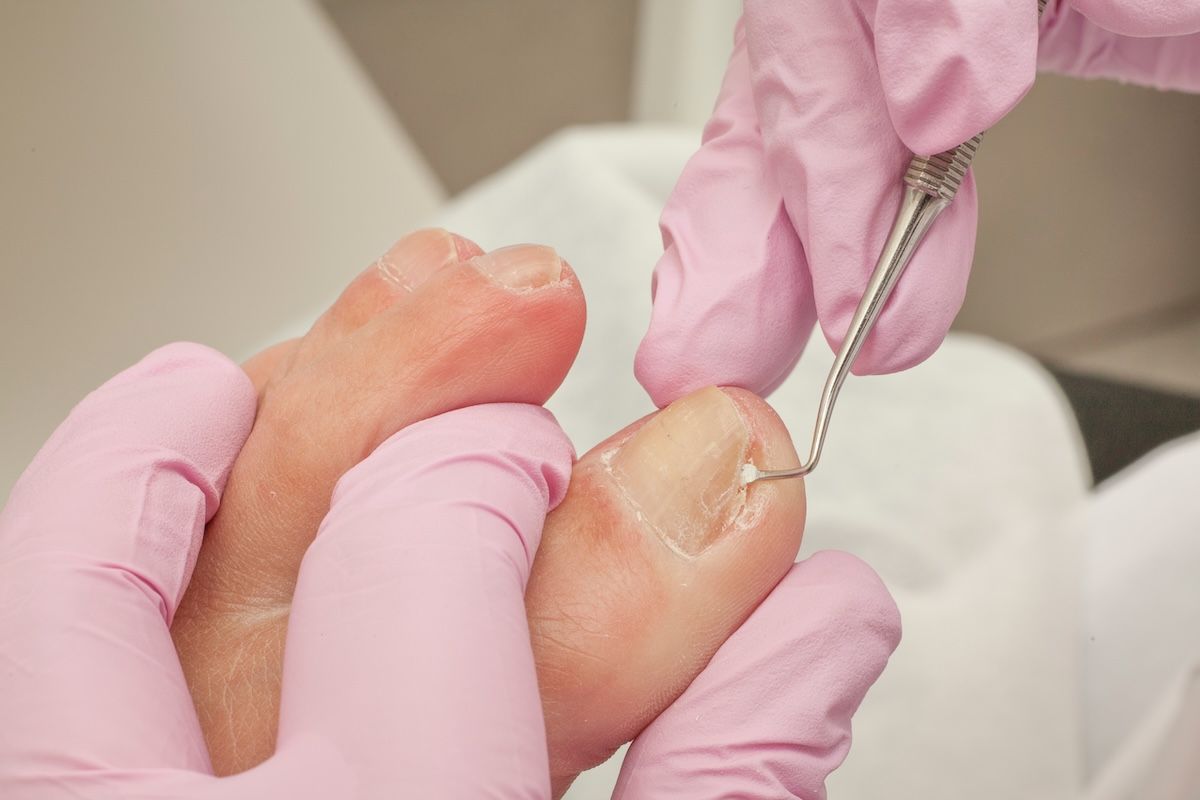
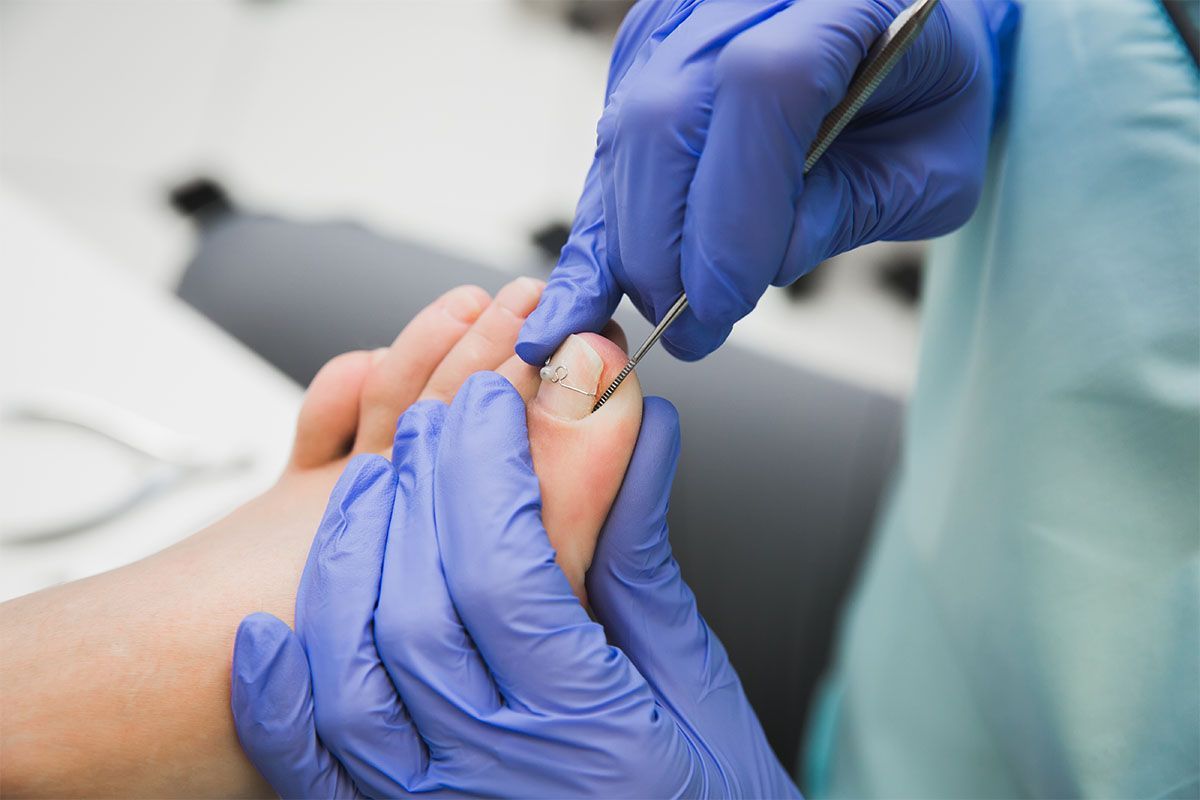
1. We use special instruments to remove the spike (80% of the time this is all we need to do, and it does not require local anaesthetic.
2. It is a very deep spike, and we need to give you a local anaesthetic then remove it as above.
3. We need to perform a minor operation permanently removing a thin piece of the side of the nail preventing it reoccurring (5% of cases).
The longer you leave it the more likely we will need to resort to option 3.
To talk to us here about the options available regarding treatment, you can contact us here at Tennant Podiatry . We are an Accredited Practice registered with the College Health and Care Professions Council (HCPC)